Historic Overview
Hill Correctional Center
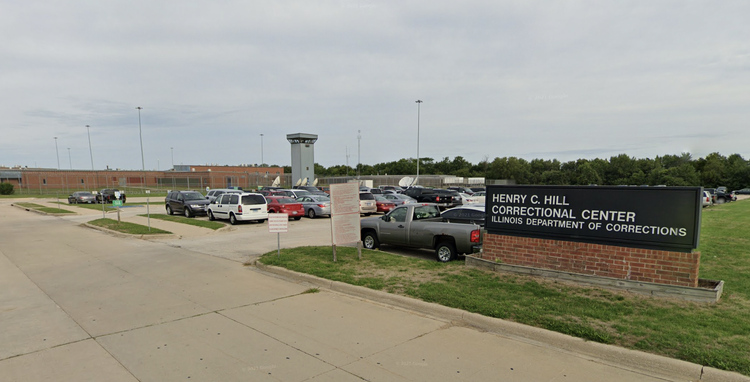
The establishment of Hill Correctional Center was controversial. Galesburg was initially rejected for consideration when, in 1997, the Department of Corrections announced its plans to construct additional penal facilities. After countless public hearings, local opposition, and rejection by both the Galesburg City Council and the Knox County Board, the project was subsequently scrapped. Residents had shown their opposition to the project, fearing that the prison would impact the local economy and public safety. However, local leaders in Galesburg coordinated efforts to convince state officials to reconsider Galesburg as a potential site for Henry Hill. Finally, on February 1st, 1985, Illinois Governor James Thompson presided at a ceremony in Galesburg for the 38 million-dollar facility. Galesburg would have its prison.1
The prison was finally established in October 1986. Hill Correctional Center was originally built for 896 men as a Medium Security facility for adult males. By 2000, Hill held 1,800 men, doubling the population and increasing the staff required to run the facility. As of June 2024, Hill has a reported population of 1,189 men, with a maximum capacity of 1,812 men. 2
Dr. Herbert Priestley
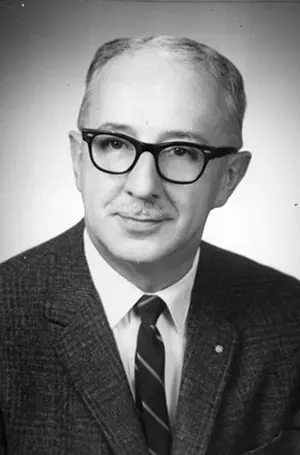
Herbert Priestley was born May 29th, 1913, in Bradford, England. He attended the University of Leeds, where he received his Bachelor of Science in 1993 and a Ph.D. in physics in 1935. After working at the Woolen Industries Research Station in Leeds for three years, Priestley decided to pivot toward education. He originally planned to work as a high school teacher but quickly enlisted as a civilian educational officer in the Royal Air Force(RAF) before the onset of the Second World War. Priestley believed that there was going to be a war in Europe and that “Hitler was getting much too big for his boots and britches and somebody had to stop him.”3 In January 1939, the RAF requested all civilian education officers to enlist in the volunteer reserve, where Priestley became a military intelligence officer. By August 1939, he was called to active duty and participated in the Battle of London, where he was responsible for the defense of London and southeastern England. After the Japanese attack on Pearl Harbor, the United States requested RAF assistance in developing its own Air Intelligence school. Priestley was then assigned as an RAF liaison officer to the American Air Force’s Air Intelligence School in Harrisburg, Pennsylvania, in 1941, where he was stationed for two years. In 1944, he received his final assignment as an RAF liaison officer to the Director of Intelligence, War Department, at the Pentagon, where his unit prepared daily “for your eyes only” intelligence summaries for President Truman and top military personnel. By the end of the war, Priestley had been awarded the Order of the British Empire by the United Kingdom and the Legion of Merit by the United States Military. 4
Priestley never returned to England. Most of his family had died during the war, and he had come to enjoy life in the United States. After gaining U.S. citizenship, Priestley returned to his chosen profession—teaching. He spent six years teaching at Ripon University before accepting a position as the Cornelia H. Dudley Professor of Physics at Knox College in 1952. He remained until his forced retirement in 1980. During his tenure, Priestley wrote numerous articles and textbooks, including his book Introductory Physics, which he wrote to emphasize the importance of science for students pursuing other areas of study. Priestley believed science was a fundamental part of a true liberal arts education. 5
“There are sounds reasons why all students, whatever their intended profession or avocation, be required to study some science. An understanding of science is as important to the business man, the lawyer, the statesman or anyone else as is an understanding of language or literature or of political or military history. Our future rests not so much upon the number of engineers and scientists we produce each year as it does upon the intellectual and cultural climate in which all of us live and work.”6
—Herbert Priestley
Despite his retirement from Knox, Priestley did not retire from teaching. Herbert Priestley went on to establish the Physics department at Carl Sandburg College (CSC) when he was hired for a 3/4th-time position for the 1984—1985 school year. While teaching at CSC, Priestley also began teaching at Hill Correctional Center for both Carl Sandburg College and Roosevelt University. Priestley retired from active teaching in 1998 but continued to work on education projects. Herbert Priestley remained in Galesburg until his death on October 13, 2005.7
While Priestley did not teach at Hill Correctional for Knox College, his impact as an educator on his students is evident. Information on his work at Henry Hill is not noted in the Knox College archives, so it is unclear what form his work took. It is also unclear whether his curriculum granted men on the inside credits for their respective universities or if Priestley operated under a GED framework. However, he serves as an early example of a former Knox faculty member becoming involved with Hill Correctional.
“‘Every potential scholar and scientist who is denied the opportunity for higher educational development will make mankind that much poorer. An oil field or a mine, which is not exploited right now, will be there in the future. But every youth born with great potentials, who is never awakened to intellectual adventure and adequate education is a priceless resource lost forever to society.'”8
—Herbert Priestley
Henry Hill Program (2022-Present)

Instructor Leads Life-Changing Course in Prison, 2014. https://www.youtube.com/watch?v=iQWvcyYLTE0.
During the 2023 Spring term, Knox College students hosted “Our Time Inside: A Cumulative Presentation of the Pilot Knox/ Henry Hill Class” as one of the first public showcases of a newly established relationship between Knox College students and men from Henry Hill Correctional Center. This newly established program was headed by Daniel J. Logan Professor of Peace and Justice, Leanne Trapedo Sims and Markesha Jackson ’24.9
Illinois has always been a national leader in Higher Education in Prisons (HEP) in the early 1950s and 1960s, and by 1962, it was the first state in the nation to offer a full-time, degree-granting college-in-prison program. By 2023, Knox College’s program in Hill was one of 14 HEP programs in Illinois.10
The inaugural course began its journey in the winter of 2022, when Trapedo-Sims required students interested in coming to Hill to take a prison education practicum course to prepare the first cohort for their time at Henry Hill.
“They need to really learn how to navigate the correctional facility, which is very different from navigating Knox College, clearly,” she said. “So I really talked to them a lot about dress code. I talked to them about how when we go in there, we have to be very professional; we have to be polite. So I do spend a lot of time talking to them about all these things, as well as talking to them about mass incarceration in the U.S. so they get kind of a foundational knowledge of what is going on in the U.S. with prisons.”11
—Leanne Trapedo Sims in an Interview with Joe Deacon of WCBU
The joint Hill-Knox courses are creative writing and poetry courses, built around the methodology established by Lori Pompa at Temple University in the late 1990s. The first cohort consisted of ten Knox students enrolled in the class and eight Hill students and took place during Spring 2023. The second cohort consisted of seven Knox and eight Hill students and met during Spring 2024. The third cohort consisted of eleven Hill students and seven Knox students and took place in Winter 2025. If you are interested in joining the work at Hill, look for the practicum courses in the Peace and Justice department.
Work Cited
- Tom Wilson, “State Refused to Say No to Prison for Galesburg,” Newspaper, Galesburg Register Mail, December 13, 2014, https://www.galesburg.com/story/news/2014/12/13/state-refused-to-say-no/35743435007/.
↩︎ - “Hill Correctional Center,” accessed November 14, 2024, https://idoc.illinois.gov/facilities/allfacilities/facility.hill-correctional-center.html.; Steve Russel, “Census Reveals Changing Face,” Galesburg Register-Mail, May 20, 2001, Struggle and Progress-African Americans in Knox County, Illinois (Knox College), Knox College Special Collection and Archives.
↩︎ - “They Met Along the Way WWII introduced Herb Priestley to world leaders” by Tammy Bould of The Register-Mail, 20th, February 2000, Series 2-001, Box 106, Folder 2, Faculty Series, Priestley, Elizabeth & Herbert, Knox College Special Collections and Archives, Knox College, Galesburg, IL. (hereafter cited as “They Met Along the Way WWII introduced Herb Priestly to world leaders, Knox College Special Collections and Archives)” ↩︎
- Abid; The Register Mail’s obituary for Herbert Priestly, 21st, October, 2005, Series 2-001, Box 106, Folder 3, Faculty Series, Priestley, Elizabeth & Herbert, Knox College Special Collections and Archives, Knox College, Galesburg, IL. ↩︎
- “They Met Along the Way WWII introduced Herb Priestly to world leaders, Knox College Special Collections and Archives ↩︎
- News Release on Dr. Herbert Priestley’s public image of science, 22nd, January, 1964, Series 2-001, Box 106, Folder 8, Faculty Series, Priestley, Elizabeth & Herbert, Knox College Special Collections and Archives, Knox College, Galesburg, IL. ↩︎
- “CSC names faculty members” in Monmouth Review Atlas 5,181 D, 26th, September, 1984, Box 106, Folder 10, Faculty Series, Priestley, Elizabeth & Herbert, Knox College Special Collections and Archives, Knox College, Galesburg, IL; “Facilitator makes 50 years as prof” by Geri Reynolds of the Register-Mail, 31st, August, 1996, Series 2-001, Box 106, Folder 10, Faculty Series, Priestley, Elizabeth & Herbert, Knox College Special Collections and Archives, Knox College, Galesburg, IL; “At CSC 14 years,” Series 2-001, Box 106, Folder 10, Faculty Series, Priestley, Elizabeth & Herbert, Knox College Special Collections and Archives, Knox College, Galesburg, IL.. ↩︎
- Annotated Transcript of Herbert Commencement Address to Avon High School, 27th, May, Series 2-001, Box 106, Folder 5, Faculty Series, Priestley, Elizabeth & Herbert, Knox College Special Collections and Archives, Knox College, Galesburg, IL. ↩︎
- “Our Time Inside: A Cumulative Presentation of the Pilot Knox/ Henry Hill Class – Events Calendar – Knox College,” Knox College, May 23, 2023, http://www.knox.edu/calendar/event/E/12902. ↩︎
- Ashton Hoselton, “Higher Education in Prison Programs in Illinois,” accessed November 14, 2024, https://educationjustice.net/wp-content/uploads/2023/07/HEP_Directory_Interactive.pdf. ↩︎
- Joe Deacon, “Knox College Pilot Program Gives Students, Henry Hill Prisoners an Opportunity to Learn Together | WCBU Peoria,” WBCU.org, October 3, 2023, https://www.wcbu.org/local-news/2023-10-03/knox-college-pilot-program-gives-students-henry-hill-prisoners-an-opportunity-to-learn-together. ↩︎